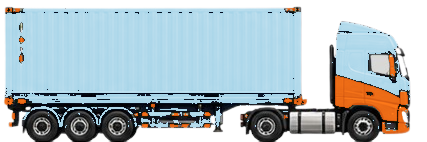
The Eastern Seaboard freight corridor — Laem Chabang, Map Ta Phut, Lat Krabang — moves millions of containers a year. The trucks that carry them are mostly driven by independent owner-operators and small fleet owners. Hard workers. People who know every speed bump between Bangkok and the port.
But for decades, they’ve had to run through brokers to find work. The broker takes their cut. Then takes another cut. By the time the shipper pays ฿3,000 for a container move, the driver sees ฿2,100 — if they’re lucky, if the payment comes this month, if the broker remembers to call.
LOADLANE exists because that arrangement is broken. Shippers pay too much. Drivers earn too little. The money disappears in a system designed to extract it, not to move freight efficiently.
What LOADLANE actually does
LOADLANE is a sealed-bid freight marketplace. A shipper posts a container job with the details — pickup, destination, container type, date. Every qualified driver on the LOADLANE network can see it and submit their own price. Drivers never see each other’s offers — only the shipper sees the full board.
The shipper posts the job they need moved, compares driver bids, and picks the driver they want. Registration is free. Posting is free.
The driver keeps more. The shipper pays less. Freight moves faster because the people closest to it — the driver who knows the route, the shipper who knows their cargo — deal directly with each other.
The Eastern Seaboard corridor is our home
Thailand’s Eastern Economic Corridor is one of Southeast Asia’s most active freight zones. Laem Chabang is the country’s primary deep-sea port. Map Ta Phut handles petrochemical and industrial cargo at scale. Lat Krabang ICD is Bangkok’s inland container hub.
LOADLANE was built on these lanes first because that’s where the density is, where the drivers are, and where the broker problem is felt hardest. We cover the entire corridor and are expanding to major intercity lanes throughout Thailand.
The corridor spans the four main Eastern Seaboard gateways — Laem Chabang, Map Ta Phut, Lat Krabang, and Bangkok Port — plus active lanes into Chonburi, Rayong, and greater Bangkok. Every booking is tracked across nine stages, from posting and pickup through delivery and proof-of-delivery (POD), so shippers and drivers always know exactly where a container is.
We don’t own trucks.
LOADLANE is a marketplace, not a carrier. The drivers on LOADLANE own their trucks, set their prices, and build their own reputation. Our job is to make sure the best drivers — not the broker’s favorites — get the best jobs. We think that’s worth building.
“Open a new lane — for anyone who wants to load, or unload.”